.png)
March 25, 2026
At this year’s Grammys, Justin Bieber stepped onto the stage in a way no one expected. There were no elaborate visuals, no heavy styling, no spectacle. Just boxers, socks, a mirror placed in front...
Read more.png)
March 25, 2026
Not long ago, the idea of a computer creating an entire song felt like science fiction. Now it’s becoming surprisingly common. With tools like Suno and Udio, AI-generated music is being uploaded to...
Read more.png)
March 25, 2026
Open Spotify’s Top 50 and you’ll notice something subtle but consistent: songs are getting shorter. Two minutes and thirty seconds is no longer unusual. Some tracks barely cross the two-minute mark...
Read more.png)
March 2, 2026
Sabrina Carpenter’s Short n’ Sweet era shows how banjo and other country sounds can live comfortably inside glossy pop production. Her tracks mix bright acoustic textures with punchy drums, synths...
Read more.png)
March 2, 2026
Over the last few years, phonk has exploded from underground SoundCloud mixes into mainstream playlists and TikTok trends. You’ve probably heard its gritty, nostalgic energy like the dark bass...
Read more.png)
March 2, 2026
Not long ago, songs were built slowly. An instrumental intro would set the mood, a verse would ease listeners in, and the chorus arrived later as the reward. Today, that structure is quietly...
Read more.png)
March 2, 2026
Bad Bunny’s 2026 Super Bowl show didn’t just break viewing records—it confirmed that the “global sound” (Latin music, Afrobeats, Amapiano, Afro-fusion) is now the center of pop culture, not a side...
Read more.png)
March 2, 2026
If you’ve been mixing music for a while, you’ve probably heard about Spotify’s big update: lossless streaming is finally here. That means Premium users can now listen to songs in full-quality FLAC...
Read more
October 23, 2025
Discover how Mix Master strengthens your brain just like an instrument - training focus, creativity, and emotional intelligence through the science of sound.
Read more.png)
September 8, 2025
Tools like Suno are now powerful enough to generate melodies, lyrics, and even full songs in seconds. That’s exciting—and controversial. Just ask Timbaland. Recently, he came under fire..
Read more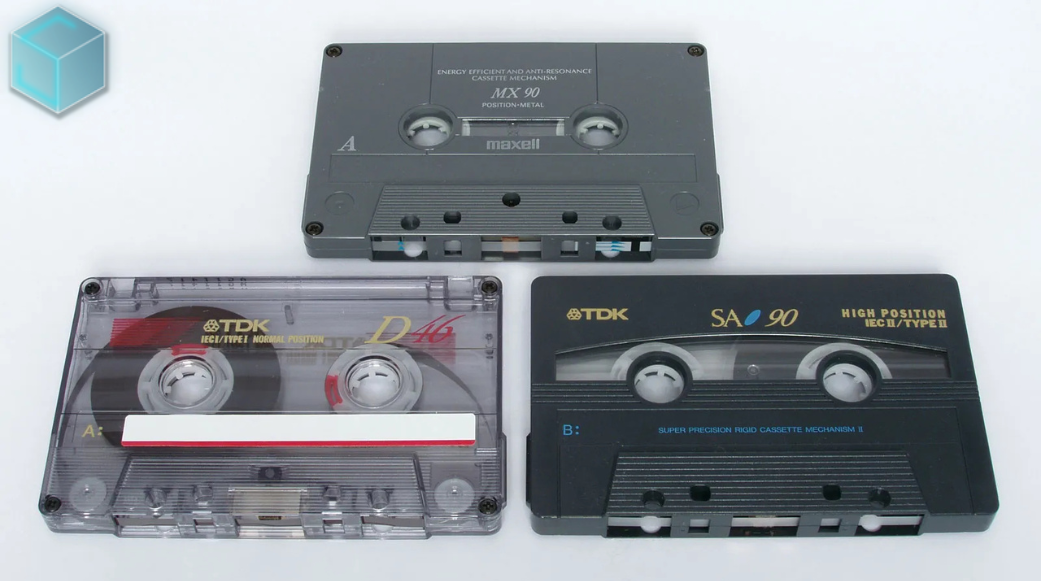
August 23, 2025
The 1980s and 1990s analog music medium known as cassette cassettes is experiencing an unanticipated comeback, with Gen Z spearheading the trend. Taylor Swift, who included cassettes in the release...
Read more
August 23, 2025
This week's most notable headline: Doja Cat's erotically charged, '80s-inspired music video, "Jealous Type," is dominating social media feeds and cultural discourse, marking her most daring...
Read more.png)
Mobile Syrup
Google has done it. They have created an AI that can generate music from text descriptions. The announcement of this is timely because recently Chat GPT, (a language learning model created by Open AI), can do everything from writing school papers, song lyrics, to solving coding problems, and is dominating the news with reports that this tool will be a massive disruption for school professors, marketing companies, programmers and creatives alike.
Google’s learning model is called MusicLM. It has the ability to produce songs that are particularly complex in composition and fidelity. It was trained on a dataset of 280,000 hours of music to learn to generate songs from simple and complex text descriptions.
Attempts at this AI have been tried before, however with MusicLM there is a major difference. The songs sound good. It is reported that the music produced is able to capture human nuances like instrumental riffs, melodies and moods. The system can also build on existing partial melodies that need to be resolved, and can pick up on this by receiving inputs through humming, singing or whistling.
The Pros:
One of the key advantages of this AI system is its accessibility. People who have no musical background can now create music simply by inputting text. The AI system takes care of the musical arrangements and generates original compositions that can be further refined and modified by the user.
The technology also offers a significant time-saving benefit for experienced composers. The AI system can generate musical ideas in seconds, freeing up more time for the composer to focus on refining the pieces and adding their own personal touch.
The AI system is versatile and can generate music in a variety of styles, from classical to pop and everything in between. This means that it can be used for different purposes, from creating background music for videos to composing original soundtracks for movies or games.

.png)
The Verge
The Cons:
It is important to note that currently, the MusicLM system is not without limitations. The music generated by the system is not always emotionally engaging or compelling. If it is used by a composer, it will be important for them to add their own creativity and emotion to the pieces generated by the AI system.
Another thing to consider are the difficult questions surrounding the legal and commercial implications:
What constitutes an original composition, when the music created is either AI assisted or purely made from AI?
After learning from human data sets, could the AI create melodies so similar to existing music created by humans, that it crosses the line of our copyright laws?
Will the average listener care whether the songs they listen to are created by a human or computer?
What does this all mean for the millions of music creators around the world creating to make a living?
These are all questions that can be answered over time, but for now, because of the ethical challenges and risks, Google has decided not to release MusicLM to the public.
This is a relief for the present day music creator, but in due time MusicLM or something like it will launch and it will continue to improve in performance. One can only imagine what the world will look like when the machines are able to create music so well that the job of the composer, producer, songwriter and artist becomes unnecessary.


