.png)
August 5, 2025
Fujii Kaze’s “Love Like This” isn’t your average love song, it’s a shimmering, soulful glide through the kind of romance that doesn’t just sweep you off your feet, it levitates you. With effortless...
Read more.png)
August 5, 2025
Laufey’s “Lover Girl” isn’t just a song, it’s a soft, sweeping confession wrapped in strings, jazz chords, and the kind of vulnerability that makes you want to cry into your oat milk latte. With...
Read more.png)
August 5, 2025
When Saweetie hit the mic with her usual sparkle and sass, fans expected bops, but what they didn’t expect was boffum. Yes, boffum. The internet has been shaken, stirred, and straight-up meme-ified...
Read more.png)
August 5, 2025
After years of teasing, manifesting, and fans quite literally breaking down over one-song discographies, Jennie finally pulled the ultimate main character move, she dropped a full solo album. No...
Read more.png)
August 5, 2025
In a heartfelt social media post, Freese explained that his decision to leave Nine Inch Nails was one of the hardest of his career. At the time, he and his wife were expecting their third child...
Read more.png)
August 5, 2025
Meet Ty Myers, a teen from Texas who is transforming the concept of a country performer in 2025, music fans. Honky-tonk roots, modest ambition, and a popular TikTok moment from 2023 inspired his...
Read more.png)
August 5, 2025
Demi Lovato is back in the pop scene with her latest single, “Fast,” which brings her back to the club-ready, EDM-infused beats that fans loved in hits like “Cool for the Summer” and...
Read more
August 1, 2025
a deeper heartbeat emerged beneath the surface: the voice of Rumi— performed and co-written by the Korean-American singer-songwriter Ejae.
Read more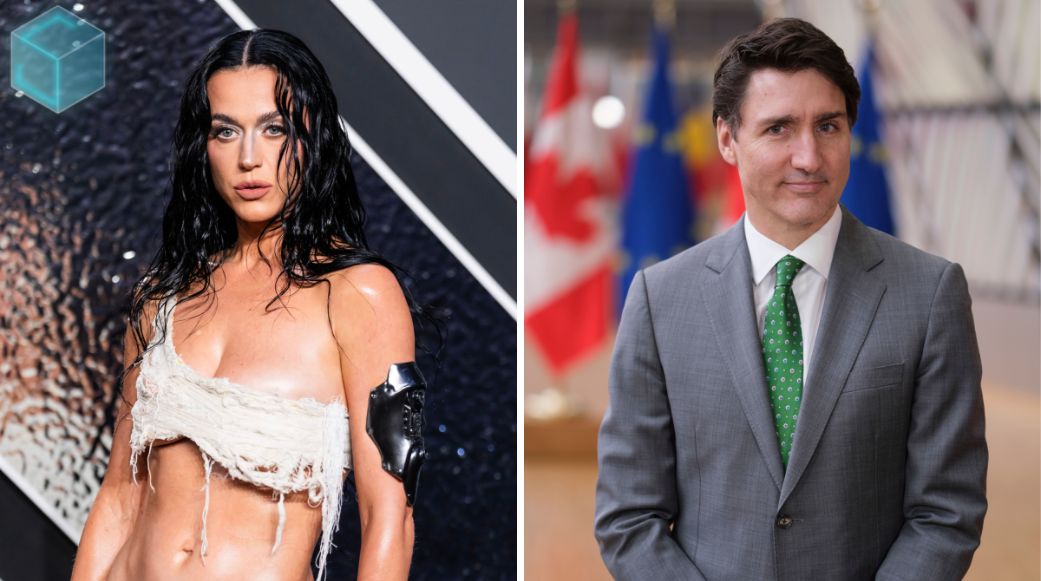
August 1, 2025
Former Canadian PM and pop star fuel speculation following her split from Orlando BloomFormer Canadian Prime Minister Justin Trudeau became the unexpected star of Katy Perry’s Montreal concert this...
Read more.png)
August 1, 2025
The dust has settled on Lollapalooza’s lineup announcement, and the message is clear: the 34-year-old festival isn’t resting on its laurels. With a single Instagram post, organizers simultaneously...
Read more.png)
July 31, 2025
When the White House repurposed a popular Jet2 Holidays meme video featuring Jess Glynne's hit "Hold My Hand" to highlight ICE deportations, the backlash was immediate and loud. “This post honestly...
Read more.png)
July 31, 2025
The silence that followed my mother’s words felt like the weight of the world pressing in on me. I was 17, but in that moment, I felt small, like that eight-year-old kid again, curled up in my...
Read more.png)
Not long ago, the idea of a computer creating an entire song felt like science fiction. Now it’s becoming surprisingly common. With tools like Suno and Udio, AI-generated music is being uploaded to streaming platforms at a pace the industry has never seen before. Some of these tracks are clearly experimental, but others sound polished enough that listeners may not even realize artificial intelligence helped create them.
That sudden wave of AI music is starting to force streaming platforms to rethink how songs are categorized, credited, and recommended. If a track can be written, sung, and produced with the help of artificial intelligence, platforms have to answer a new question: what exactly counts as a “human” song?
For streaming services, the issue isn’t just creative. It’s structural. Discovery systems rely on accurate artist identities and real listener engagement. If automated songs begin flooding the system under fake or algorithm-generated artist names, it becomes harder for real musicians to reach audiences.
Because of this, platforms are exploring ways to identify or label AI-assisted tracks. The goal isn’t necessarily to remove them, but to introduce transparency so listeners understand how the music they’re hearing was made.
Even as generative tools improve, producers can often hear subtle differences between AI performances and human ones. A big reason comes down to micro-details.
Human vocals naturally include tiny imperfections. Pitch drifts slightly between notes. Timing pushes or relaxes against the beat. Breaths, pauses, and phrasing shape the emotional weight of a line.
AI systems can produce technically correct melodies, but they often struggle with those unpredictable human shifts. The result can sound clean yet strangely flat, as if something emotional is missing from the performance.
Many producers intentionally keep small imperfections in recordings because they add character. Slight timing variations create groove. Tiny pitch differences make vocals feel expressive rather than robotic.
Ironically, the very things technology once tried to remove from recordings are now the elements listeners connect with most.
Despite the debate around AI music, many artists are already treating these tools as part of the creative process rather than a replacement for it. AI can generate rough ideas, chord progressions, or demo vocals that musicians later refine with their own performance and production choices.
Music technology has always reshaped the industry, from synthesizers to Auto-Tune. Artificial intelligence may simply be the next chapter in that evolution.
What’s changing now is that streaming platforms are being forced to acknowledge it, and adapt their rules to keep music discovery fair, transparent, and human at its core.
.png)


