.png)
August 5, 2025
Fujii Kaze’s “Love Like This” isn’t your average love song, it’s a shimmering, soulful glide through the kind of romance that doesn’t just sweep you off your feet, it levitates you. With effortless...
Read more.png)
August 5, 2025
Laufey’s “Lover Girl” isn’t just a song, it’s a soft, sweeping confession wrapped in strings, jazz chords, and the kind of vulnerability that makes you want to cry into your oat milk latte. With...
Read more.png)
August 5, 2025
When Saweetie hit the mic with her usual sparkle and sass, fans expected bops, but what they didn’t expect was boffum. Yes, boffum. The internet has been shaken, stirred, and straight-up meme-ified...
Read more.png)
August 5, 2025
After years of teasing, manifesting, and fans quite literally breaking down over one-song discographies, Jennie finally pulled the ultimate main character move, she dropped a full solo album. No...
Read more.png)
August 5, 2025
In a heartfelt social media post, Freese explained that his decision to leave Nine Inch Nails was one of the hardest of his career. At the time, he and his wife were expecting their third child...
Read more.png)
August 5, 2025
Meet Ty Myers, a teen from Texas who is transforming the concept of a country performer in 2025, music fans. Honky-tonk roots, modest ambition, and a popular TikTok moment from 2023 inspired his...
Read more.png)
August 5, 2025
Demi Lovato is back in the pop scene with her latest single, “Fast,” which brings her back to the club-ready, EDM-infused beats that fans loved in hits like “Cool for the Summer” and...
Read more
August 1, 2025
a deeper heartbeat emerged beneath the surface: the voice of Rumi— performed and co-written by the Korean-American singer-songwriter Ejae.
Read more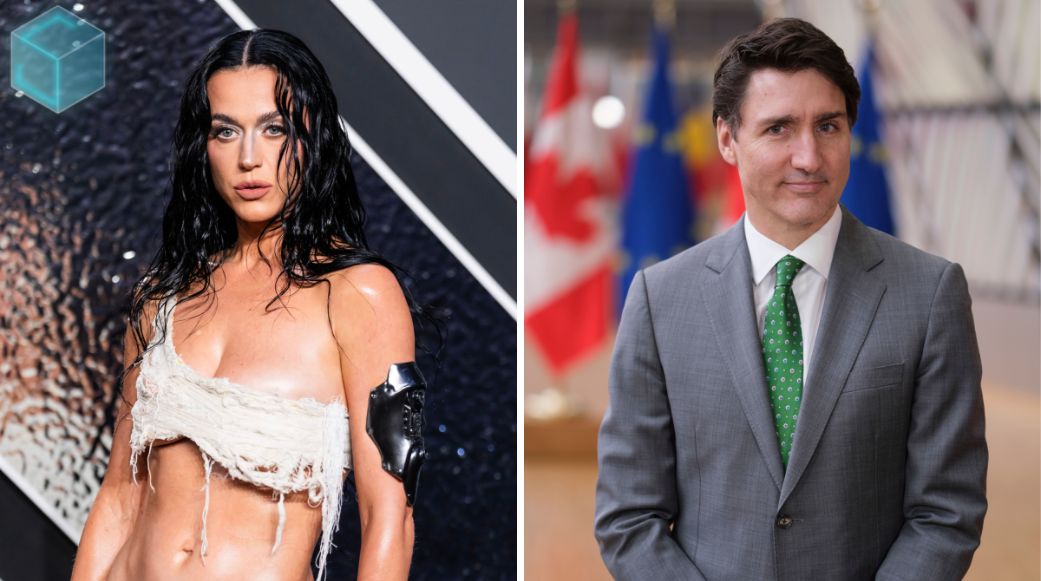
August 1, 2025
Former Canadian PM and pop star fuel speculation following her split from Orlando BloomFormer Canadian Prime Minister Justin Trudeau became the unexpected star of Katy Perry’s Montreal concert this...
Read more.png)
August 1, 2025
The dust has settled on Lollapalooza’s lineup announcement, and the message is clear: the 34-year-old festival isn’t resting on its laurels. With a single Instagram post, organizers simultaneously...
Read more.png)
July 31, 2025
When the White House repurposed a popular Jet2 Holidays meme video featuring Jess Glynne's hit "Hold My Hand" to highlight ICE deportations, the backlash was immediate and loud. “This post honestly...
Read more.png)
July 31, 2025
The silence that followed my mother’s words felt like the weight of the world pressing in on me. I was 17, but in that moment, I felt small, like that eight-year-old kid again, curled up in my...
Read more.png)
Open Spotify’s Top 50 and you’ll notice something subtle but consistent: songs are getting shorter. Two minutes and thirty seconds is no longer unusual. Some tracks barely cross the two-minute mark. Long intros are disappearing. Extended bridges are rare. And yet, these songs don’t feel smaller.
In fact, many of them feel bigger.
Streaming hasn’t just changed how we consume music. It’s quietly reshaping how songs are arranged.
On streaming platforms, every second matters. Listener retention affects algorithm placement. Skips affect reach. The faster a song establishes its identity, the more likely it is to survive the scroll.
As a result, modern arrangements prioritize immediacy. The first vocal often arrives within seconds. Drums enter earlier. The pre-chorus may be shortened or removed entirely. The goal is clarity: show the listener what the song is about before they have time to disengage.
But this isn’t just about cutting time. It’s about using time more efficiently.
Traditional pop structure might look like this:
Intro → Verse → Pre-Chorus → Chorus → Verse → Pre-Chorus → Chorus → Bridge → Final Chorus → Outro
Now, many streaming-era hits compress that arc:
Intro (2–4 bars) → Verse → Chorus → Verse → Chorus → Short Bridge or Drop → Final Chorus
Transitions happen quicker. Sections are tighter. Repetition is intentional rather than indulgent.
For producers, this means every section must justify its existence. If a pre-chorus doesn’t meaningfully increase tension, it may not belong. If a second verse repeats the first without adding energy, it risks losing momentum.
Arrangement efficiency is becoming a core skill.
Here’s the interesting part: shorter songs often feel more explosive.
Why?
Because impact is concentrated. Instead of stretching tension across a long runtime, producers create sharper contrasts between sections. A minimal verse makes the chorus feel massive. A brief breakdown makes the drop hit harder.
When runtime shrinks to 2–2.5 minutes, dynamics have to work harder. That means:
In other words, the arrangement becomes more architectural. Every decision affects momentum.
The challenge isn’t just making songs shorter. It’s removing what doesn’t serve the emotional arc.
Ask yourself:
Efficient arrangement doesn’t mean eliminating creativity. It means sharpening it.
A well-built 2:20 track can feel more complete than a meandering 3:40 song if each section moves the listener somewhere new.
Streaming didn’t kill song structure. It refined it. Just like radio once favored tight edits, digital platforms reward clarity and replay value.
For producers and songwriters, this shift is actually empowering. When time is limited, focus improves. You’re forced to identify the strongest hook, the most compelling transition, the most effective dynamic contrast.
Shorter songs aren’t about shrinking ideas. They’re about distilling them.
And in today’s music landscape, the ability to say more in less time might be the most valuable arrangement skill of all.
.png)


