
August 19, 2025
“Your Idol” stands out in Kpop Demon Hunters not just as a catchy track, but as one of the most self-aware songs in the whole project. At first listen, it has all the hallmarks of a classic K-pop...
Read more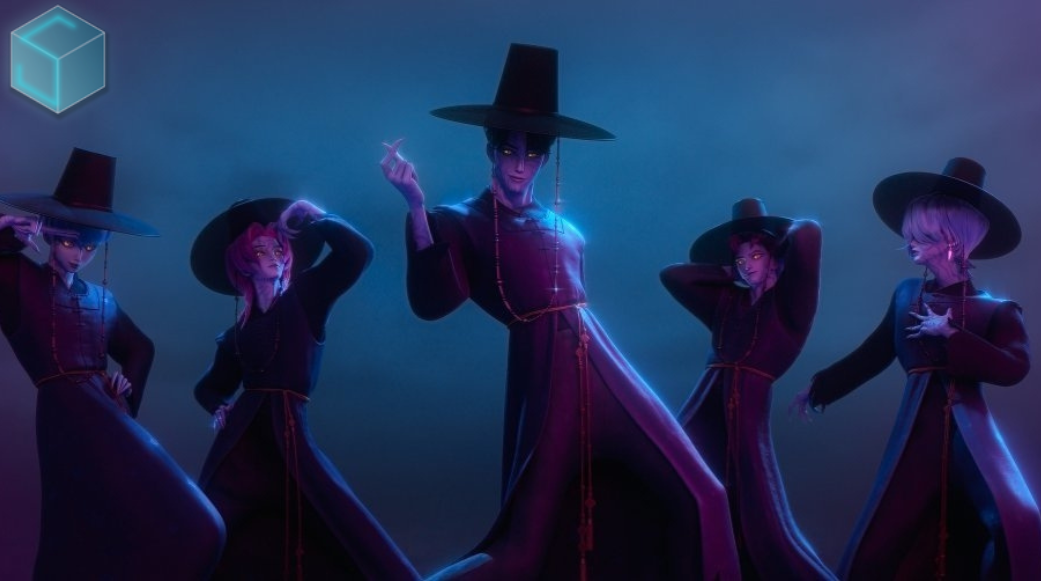
August 19, 2025
If you’ve scrolled TikTok, Insta, or literally any corner of the internet in the past few weeks, you’ve probably heard it: the fizzy, feel-good bop known as “Soda Pop” by the Saja Boys. Straight...
Read more
August 19, 2025
Skai Is Yourgod didn’t just drop a song, he dropped a cultural grenade. His track “Stacks From All Sides” has taken TikTok by storm, and the secret sauce? A cheeky little sample from Beetle on...
Read more
August 19, 2025
After 70 weeks at No. 1 with “Too Sweet,” Hozier’s reign on Billboard’s Hot Rock Songs chart comes to an end as newcomer Sombr takes over with...
Read more
August 19, 2025
Charli XCX brought her groundbreaking Brat era to a poignant close Friday night during an electrifying performance at South Korea's One Universe Festival. The pop innovator marked the final...
Read more
August 19, 2025
Taylor Swift’s appearance on Travis and Jason Kelce’s New Heights podcast drew 1.3M live viewers, breaking YouTube records and sparking buzz with details about her new album The Life of a...
Read more
August 19, 2025
After a six-year silence, Chance the Rapper is officially back. On August 15, 2025, he will drop his sophomore album, Star Line, marking a new chapter filled with growth, travel, and creative...
Read more
August 19, 2025
Lana Del Rey’s new song takes aim at Ethel Cain, referencing an alleged personal rift involving Instagram posts, a mutual ex, and behind-the-scenes remarks...
Read more
August 15, 2025
The music industry collectively lost its composure when Taylor Swift announced her twelfth studio album The Life of a Showgirl, with everyone from Sabrina Carpenter to Caitlin Clark publicly...
Read more
August 15, 2025
One of the most talked-about musical moments of the summer is JoJo Siwa's recent rendition of the 1981 classic "Bette Davis Eyes." On July 11, she shared her retro-style rendition, sparking intense...
Read more
August 15, 2025
Chappell Roan is keeping fans guessing about her sophomore album, admitting she has "no idea" what direction her new music will take. In a revealing interview with Apple Music 1's Zane Lowe, the...
Read more
August 15, 2025
In a candid new interview with GQ, Kansas City Chiefs tight end Travis Kelce is pulling back the curtain on his relationship with pop superstar Taylor Swift. The NFL star revealed intimate details...
Read more.png)
Creating music often feels like an intricate puzzle. You might have a melody that you love, but when it comes to pairing it with chords, you feel stuck. If you're in this situation, you're not alone. In fact, many famous musicians have faced similar challenges. For instance, Paul McCartney mentioned in interviews that when he first started with The Beatles, he only knew a handful of chords. It was through experimentation and persistence that he began crafting some of the most memorable songs in history.
Here, we’ll explore how you can start pairing chords with your melodies, offering practical steps and inspiration from the legends.
Melodies are built around notes, and chords are built around groups of notes that harmonize with each other. The trick to matching them is understanding the key your melody is in. For example, if your melody predominantly uses notes from the C major scale (C, D, E, F, G, A, B), you'll want to pick chords that fit within the key of C major.
If you’re self-taught and not sure what key your melody is in, try playing along with basic major or minor chords (C major, G major, A minor, etc.) until one seems to complement the melody. This trial-and-error approach can work wonders in developing your ear.
You don’t need a vast chord vocabulary to create great music. Even famous musicians, such as Kurt Cobain from Nirvana, worked with a limited set of chords. Songs like "Smells Like Teen Spirit" are built on just four basic power chords. Start with a few major or minor chords and build from there. Here’s a helpful formula:
Sometimes, your guitar’s tuning or the key you start in might not feel right. Using a capo can help adjust the pitch without changing the chord shapes. Similarly, you can try transposing (changing the key) of your melody up or down to find a comfortable chord structure that matches your voice.
What you’re referring to when you mention using strings instead of full chords is likely called playing "arpeggios" or "non-chord tones." This involves playing individual notes from the chord rather than strumming all the strings at once. Artists like Ed Sheeran and John Mayer use this technique to add subtlety to their music. By picking one or two notes that match your melody, you can create a sophisticated harmony without knowing dozens of chords.
Take inspiration from musicians who’ve mastered matching chords to their melodies. For example, Taylor Swift, who began as a self-taught musician, often built songs using only a handful of basic chords. Similarly, Johnny Cash created many of his iconic songs using simple chords, yet with a powerful melodic structure.
Since you’re teaching yourself, there are plenty of free resources that can help you expand your chord knowledge. Apps like "Chordify" or websites like "Ultimate Guitar" allow you to input a melody and find chords that fit. Another great method is learning songs you love and analyzing their chord progressions.
Many famous musicians had to overcome similar frustrations. Paul McCartney admitted that in the early days, he only knew three chords and had no formal training. He and John Lennon would experiment, play around with what sounded right, and let the music guide them. Similarly, Jack White of The White Stripes intentionally used limited resources (like fewer strings) to push his creativity to new heights.
Matching chords to your melody can feel overwhelming at first, but the key is persistence and creativity. Keep experimenting, keep playing, and trust that over time, the process will become more intuitive. Just remember, even the greatest musicians struggled in the beginning—and some of the best songs ever written came from that struggle.
So, whether you’re starting with just a few chords or exploring arpeggios and melodies, you’re in good company. Keep strumming, keep singing, and most importantly—keep creating.
Call to Action: Have your own tips for pairing chords to melodies? Share them in the comments, and let’s build a community of musicians helping each other out!
.png)


