.png)
November 13, 2024
In an industry bursting with noise, Gracie Abrams has mastered the rare art of making listeners lean in. Her songs, built on confessional storytelling, cut through the clutter by speaking directly...
Read more.png)
November 13, 2024
Olivia Rodrigo’s music resonates deeply with Gen-Z. Her songs—raw, fierce, and honest—are filled with fear, anger, and anxiety, emotions that define the reality of today’s teens. As much as we’d...
Read more.png)
November 11, 2024
Taylor Swift’s success is no accident; it's built on an unmatched knack for songwriting. According to Toby Koenigsberg, Associate Professor and Chair of Popular Music, Swift’s songs are both...
Read more.png)
November 11, 2024
In today’s music landscape, live concert broadcasts have grown increasingly predictable, packaged, and polished. But at this year’s Coachella, Frank Ocean shattered the mold with a performance that...
Read more.png)
November 11, 2024
The Chicago rapper Lil Durk is out with his ninth studio album Deep Thoughts on 22nd November 2024. This album is a follow-up to his album Almost Healed (2023) and will have no shortage of eager...
Read more.png)
November 11, 2024
Morgan Wallen's country music career has been one of hustle, raw talent, and the sort of sound that has changed the genre. Wallen began his career as a small-town visionary but his music never...
Read more.png)
November 11, 2024
Pharrell Williams' journey from a McDonald's employee to a global music icon, fashion mogul, and cultural influencer is a testament to talent, resilience, and innovation. His story is not just...
Read more.png)
November 9, 2024
In a world where pop icons often aim for flawless personas, Charli XCX has taken a different route, embracing a new brand of "brattiness" that redefines what it means to be....
Read more.png)
November 8, 2024
In a move that caught the music world by surprise, Addison Rae’s latest single, Diet Pepsi, has reshaped her image and proved she’s more than just a social media star....
Read more.png)
November 8, 2024
Coldplay has been a cornerstone of the pop-rock scene for over two decades, with their sound evolving from melancholic, guitar-driven ballads to vibrant, arena-filling anthems that defy genre...
Read more.png)
November 8, 2024
In the music industry, some of the most famous songs weren’t performed by the artists who wrote them. Think of classics like Dolly Parton’s "I Will Always Love You" or Sia’s "Diamonds."...
Read more.png)
November 5, 2024
Quincy Jones, the legendary music titan, has left us at 91, but his spirit endures through every note, melody, and rhythm he touched. From his groundbreaking production on Michael Jackson’s Thriller..
Read more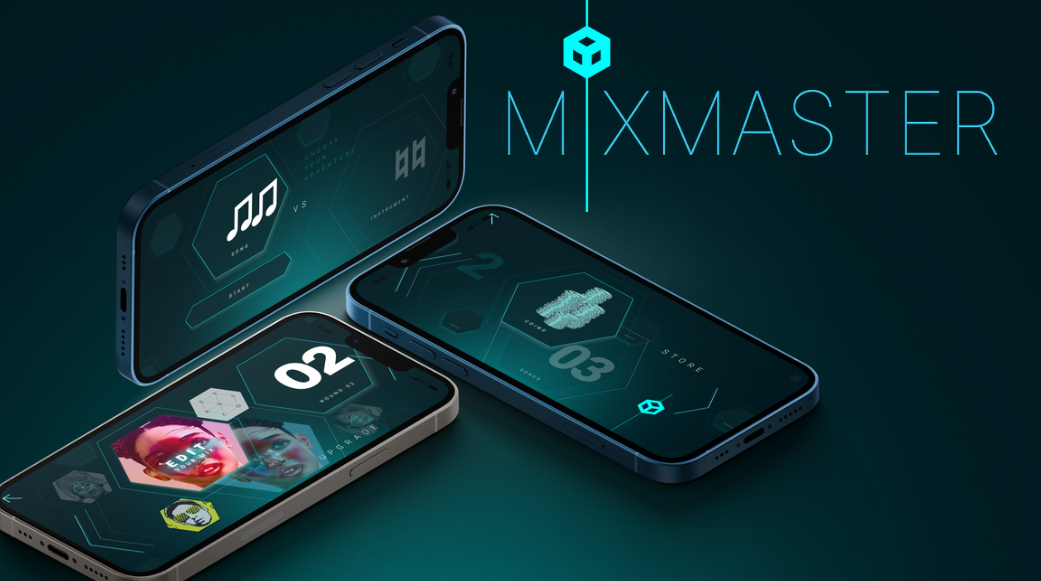
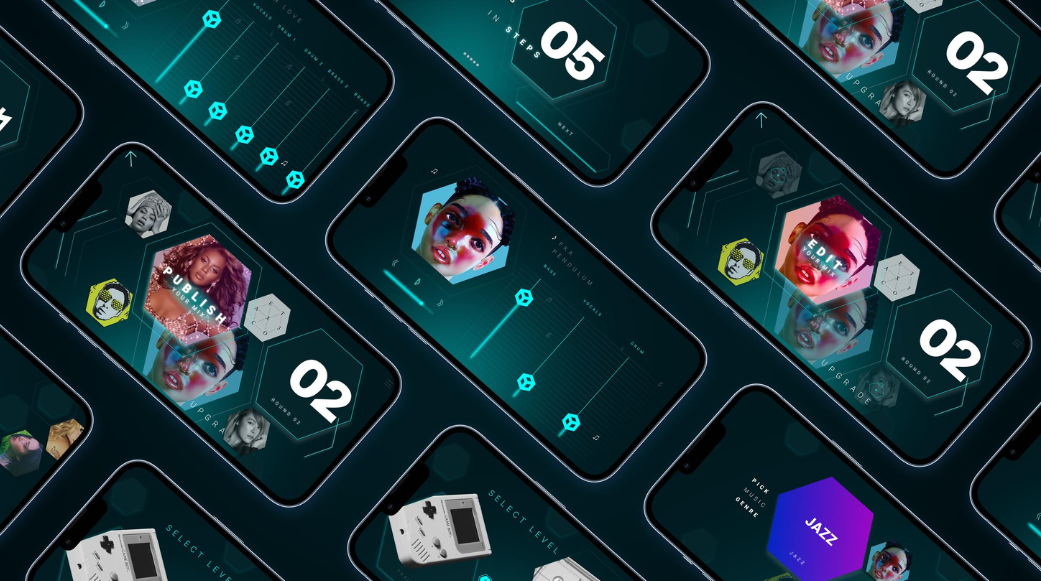
Most people think of Mix Master as a game that helps you train your ears — but beneath the fun challenges and glowing faders, something much deeper is happening. Every time you play, you’re not just getting better at mixing music. You’re actually reshaping your brain
Neuroscientists have long known that playing music and video games, can physically increase gray matter in the brain.
*Super Mario has been shown in scientific studies to improve certain brain functions — particularly those related to spatial navigation, strategic planning, memory, and motor coordination. 🧠🎮*
.png)
Mix Master does the same — but through sound.
Each time you adjust a fader, detect subtle EQ shifts, or balance reverb, you activate regions of the brain linked to focus, creativity, coordination, and emotional intelligence.
Here’s how:
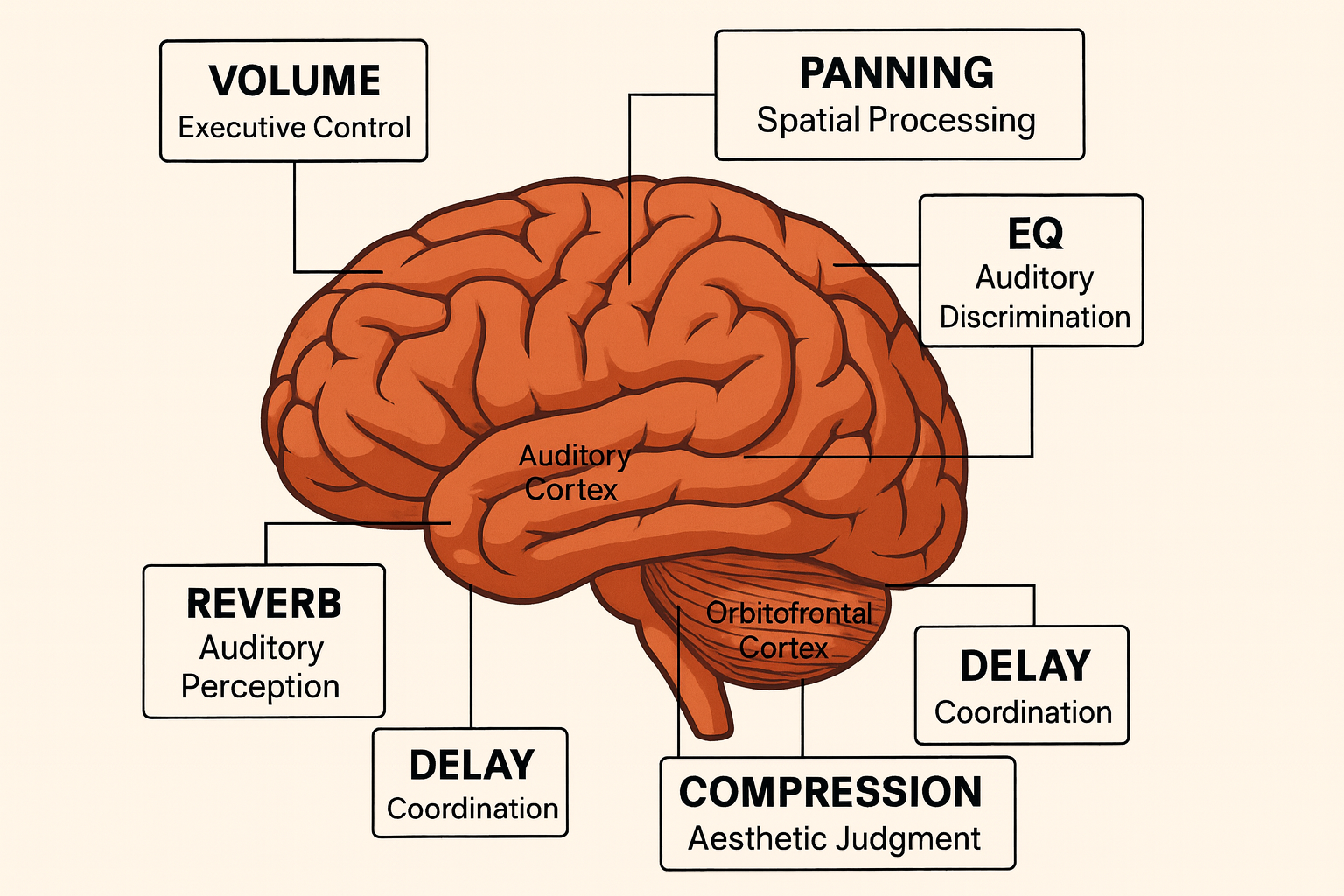
Brain Region: Auditory Cortex
Each time you adjust EQ, reverb, or panning, you’re rewiring your auditory cortex to detect subtle nuances. That means you don’t just hear music better - you hear people better too. You pick up tone, intent, and emotion, which makes you more empathetic and present in conversations.
Result: Better communication. Deeper connections. Sharper awareness of the world around you.
Brain Region: Prefrontal Cortex
Mixing demands memory - remembering what you heard seconds ago, testing variations, and planning adjustments. This stimulates the prefrontal cortex, which governs focus and problem-solving.
Result: You’ll find it easier to concentrate, retain information, and make confident, well-timed decisions in work and life.
Brain Region: Parietal Lobe
Balancing a stereo field is like managing a 3D space with sound. Your parietal lobe processes that - the same region used for physical coordination and spatial awareness.
Result: Improved physical coordination, better organization, and a stronger sense of presence in your environment.
Brain Region: Orbitofrontal Cortex
When you decide what “sounds right,” you’re building neural circuits of taste and creative judgment. That’s the same mental muscle behind design, leadership, and emotional decision-making.
Result: Sharper creative instincts and confidence in your own ideas - whether mixing music or making life choices.
Brain Region: Cerebellum
Mix Master’s gameplay - moving faders, adjusting effects in time - trains your cerebellum. Beyond physical coordination, the cerebellum also plays a huge role in emotional balance.
Result: Better rhythm in both movement and mindset - more calm under pressure, more control in chaos.
Brain System: Reward Pathways (Dopamine Circuits)
Every completed module releases a burst of dopamine - your brain’s natural “motivation molecule.” It rewards progress, reinforces learning, and keeps you striving for more.
Result: Resilience. Momentum. And a lasting sense of growth - both musically and mentally.
Mix Master isn’t just a game. It’s a creative cognitive gym - a place to train your ears, your focus, and your intuition simultaneously. By mastering sound, you’re mastering yourself.
Mix Master grows your brain by teaching you how to hear, think, and create like a true artist - one fader at a time.
.png)


