
August 19, 2025
“Your Idol” stands out in Kpop Demon Hunters not just as a catchy track, but as one of the most self-aware songs in the whole project. At first listen, it has all the hallmarks of a classic K-pop...
Read more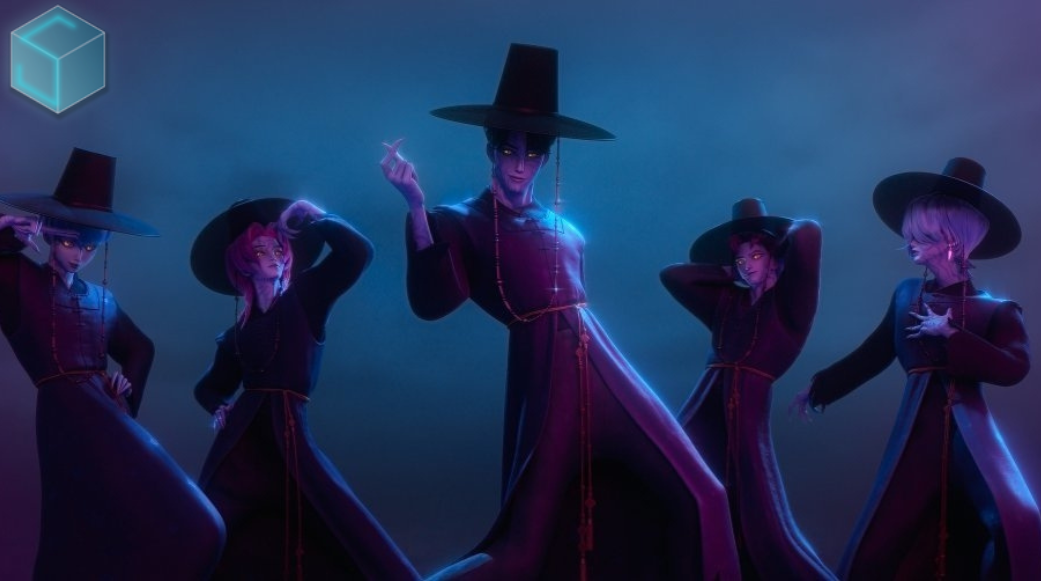
August 19, 2025
If you’ve scrolled TikTok, Insta, or literally any corner of the internet in the past few weeks, you’ve probably heard it: the fizzy, feel-good bop known as “Soda Pop” by the Saja Boys. Straight...
Read more
August 19, 2025
Skai Is Yourgod didn’t just drop a song, he dropped a cultural grenade. His track “Stacks From All Sides” has taken TikTok by storm, and the secret sauce? A cheeky little sample from Beetle on...
Read more
August 19, 2025
After 70 weeks at No. 1 with “Too Sweet,” Hozier’s reign on Billboard’s Hot Rock Songs chart comes to an end as newcomer Sombr takes over with...
Read more
August 19, 2025
Charli XCX brought her groundbreaking Brat era to a poignant close Friday night during an electrifying performance at South Korea's One Universe Festival. The pop innovator marked the final...
Read more
August 19, 2025
Taylor Swift’s appearance on Travis and Jason Kelce’s New Heights podcast drew 1.3M live viewers, breaking YouTube records and sparking buzz with details about her new album The Life of a...
Read more
August 19, 2025
After a six-year silence, Chance the Rapper is officially back. On August 15, 2025, he will drop his sophomore album, Star Line, marking a new chapter filled with growth, travel, and creative...
Read more
August 19, 2025
Lana Del Rey’s new song takes aim at Ethel Cain, referencing an alleged personal rift involving Instagram posts, a mutual ex, and behind-the-scenes remarks...
Read more
August 15, 2025
The music industry collectively lost its composure when Taylor Swift announced her twelfth studio album The Life of a Showgirl, with everyone from Sabrina Carpenter to Caitlin Clark publicly...
Read more
August 15, 2025
One of the most talked-about musical moments of the summer is JoJo Siwa's recent rendition of the 1981 classic "Bette Davis Eyes." On July 11, she shared her retro-style rendition, sparking intense...
Read more
August 15, 2025
Chappell Roan is keeping fans guessing about her sophomore album, admitting she has "no idea" what direction her new music will take. In a revealing interview with Apple Music 1's Zane Lowe, the...
Read more
August 15, 2025
In a candid new interview with GQ, Kansas City Chiefs tight end Travis Kelce is pulling back the curtain on his relationship with pop superstar Taylor Swift. The NFL star revealed intimate details...
Read more
Photo Credit: Global News
Copyright infringement cases are very much on the rise in the music industry. Recently, Ed Sheeran was on the receiving end of one. Fortunately for him and the music industry as a whole, he won.
Who was suing Sheeran and what exactly was he being accused of?
The estate of Ed Townsend, the co-writer of Marvin Gaye’s “Let’s Get It On,” accused Sheeran of copying a portion of their song in Sheeran’s song “Thinking Out Loud.” Specifically, a similar four-chord progression was under the microscope.
Songs like Gaye’s that were written before 1978 are protected by very limited copyright laws. In fact, only the sheet music submitted to the Copyright Office is protected. That means that only chords, lyrics, and vocal melody are protected.
As such, chords are the main part being debated in this court case.
According to the plaintiff, the chord progression in Sheeran’s song was “virtually identical” to the one in the same spot in Gaye’s song. However, the second chord slightly varies between the songs. The plaintiff argued that this specific use was original enough to warrant copyright protection. Alexander Stewart, a musicologist brought in as a witness, backed up these claims along with a mash-up song that Sheeran had performed using the two songs in the case.

.png)
Photo Credit: Elizabeth Cook/PA
As can be seen, Sheeran did not take this accusation lying down.
“To have someone come in and say, ‘We don’t believe you, you must have stolen it. I find that really insulting.”
The mash-up video shown as evidence was quickly shot down by Sheeran:
“If I had done what you’re accusing me of doing, I’d be a quite an idiot to stand on a stage in front of 20,000 people and do that.”
Furthermore, Sheeran proved how easily pop songs can be combined into a mash-up by segueing his songs to other popular songs, including songs by artists Nina Simone, Stevie Wonder, Bill Withers, Blackstreet, and Van Morrison. He did all of this with this guitar on the spot in the courtroom.
For the chord progression, Sheeran argued that these chords are the most basic blocks of creating music. Songs like “Georgy Girl” by the Seekers and “Hurdy Gurdy Man” by Donovan proved exactly that. Even a guitar textbook that was brought forward contained this knowledge.
“There’s only so many notes and very few chords used in pop music,” Sheeran said in an Instagram video. “Coincidence is bound to happen if 60,000 are being released every day on Spotify.”
Luckily, Sheeran won his case. But why is this lucky? The main reason is that losing would have set a dangerous precedent in the music industry. One where anyone could easily accuse anyone of copyright infringement for the most basic of things.
Furthermore, privatizing these building blocks of music would make songwriting incredibly difficult.
Jennifer Jenkins, a law professor specializing in music copyright, emphasized this: “If in this case an extremely common chord progression, set to a basic harmonic rhythm, is privatized, then we are going in reverse, and we are removing essential ingredients from every songwriter’s tool kit.”
Ultimately, all music is inspired by other music. It is pretty much impossible to find a song that doesn’t contain anything from other songs.
If that’s the case, then banning people from using certain songwriting tools would greatly stagnate the creation of new music. And nothing good can come from that.

Photo Credit: Entertainment Tonight


